
AmbiBack CAM
Archive: AmbiBack CAM remained a prototype and was never on sale. The details describe the state of the 2021 beta tests; completing it is part of the DIY project.
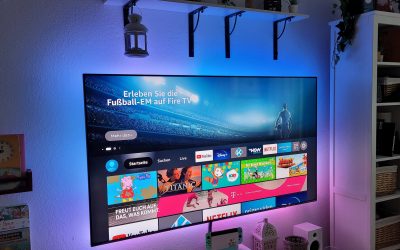
Retrofit bias lighting for TVs and projectors. It consists of a camera module and an LED module, both with Wi-Fi and Bluetooth.
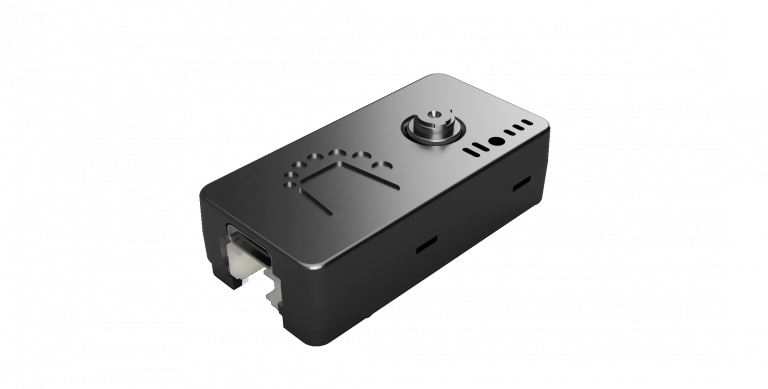
The camera is powered from a USB port and can stand anywhere in the room. All it needs is a clear, reasonably straight view of the TV or projection screen. Because it sees the finished picture, the source does not matter: smart TV apps work just as well as devices on the HDMI input.
Camera controller
- connected over USB, draws less than 1 watt
- up to 40 frames per second, about 30 to 40 ms per frame
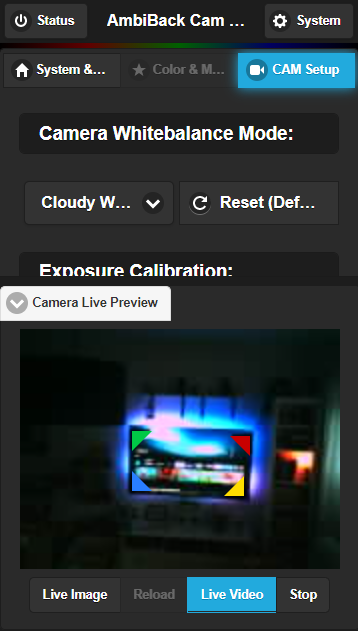
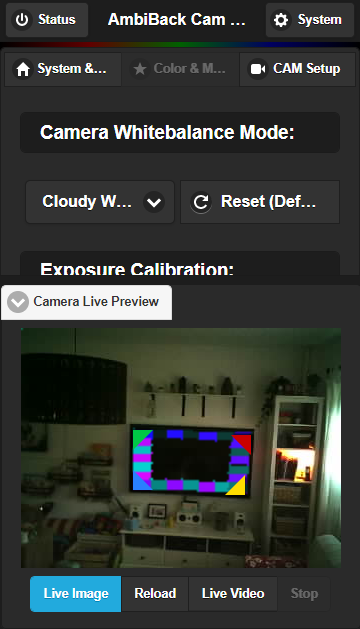
- automatic white balance with several modes, brightness calibration for the picture area
- three methods: one colour for everything (Single Color), one colour per side (Fullbar Color) or Detail with up to 60 zones
- joins the Wi-Fi network via the router's WPS button or the AmbiBack PC app
- web interface for phones and tablets, firmware updates
LED controller
- open LED standards, including WS2812B, WS2813 and WS2813B at 5 V
- up to 255 LEDs
- ambient mode for fixed colours and effects
- calculates smooth transitions between two frames, so that up to 100 frames per second become visible
LED strip of the prototype
| LED type | WS2813B, 5 V |
|---|---|
| Density | 44 LEDs per metre |
| Length | 255 LEDs at most, which is 5.75 m |
| Screen size | up to 75 inches, or up to 82 inches with a gap to the edge |
Smart lamps
In addition to the LED strip, up to 10 Philips Hue lamps can be added. Each lamp can be configured individually.
Why a camera?
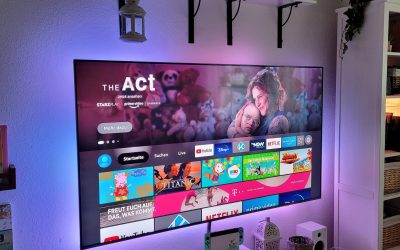
From 2018 to 2020 DreamScreen was distributed and supported in Germany. After it was discontinued, AmbiBack was developed as a solution of its own. The camera was a deliberate decision against HDMI devices and their well-known problems. Oliver Kohlgraf of Tele-Kohlgraf played a major part in shaping the development and used a prototype day to day.